

Who This Program Is Designed For
This program is designed for children aged 4 to 18 years with Autism Spectrum Disorders who experience functional challenges in communication, sensory regulation, behaviour, sleep or daily adaptation, and whose families are seeking structured, personalised medical support focused on measurable functional improvement.
Each child is accepted into the program only after an individual medical assessment, allowing the therapeutic strategy to be precisely adapted to the child’s developmental profile while maintaining the highest standards of safety and clinical oversight.

Clinical Results
from Our Practice
Based on structured observational analysis of 158 children diagnosed with Autism Spectrum Disorder (ASD) treated at BioCells Medical between 2013–2025.
(Data derived from internal clinical registry with developmental and behavioural follow-up.)
Core Clinical Outcomes
• 78% of children demonstrated measurable improvement in behavioural regulation and functional adaptation within 3–6 months
• 72% showed improvement in communication abilities (verbal output, comprehension, or expressive language use)
• 69% experienced reduction in repetitive behaviours or sensory dysregulation
• Average CARS-2 score improvement: –4.2 points within the first 6 months following protocol initiation
• 74% maintained sustained developmental progress, with observational follow-up in selected cases extending up to 3.5 years, under continued monitoring and individualised support strategy
Key Functional Improvements
• Increased verbal communication or phrase formation – 70%
• Improved eye contact and social engagement – 73%
• Better emotional regulation and reduced outbursts – 76%
• Reduced sensory hypersensitivity – 67%
• Improved attention span and task focus – 71%
• Greater independence in daily routines – 68%
Observed Clinical Timeline
• Initial behavioural and communication shifts typically observed within 3–6 weeks
• Clinically meaningful developmental progress most commonly noted at 3–6 months
• Stabilisation and continued developmental gains commonly sustained for 2–3 years under structured follow-up and maintenance protocol
Outcomes vary depending on ASD severity level, age at intervention, baseline developmental profile, and individual biological response. These data represent observational clinical practice results and do not constitute a guarantee of therapeutic effect.


Understanding
Cellular Therapy
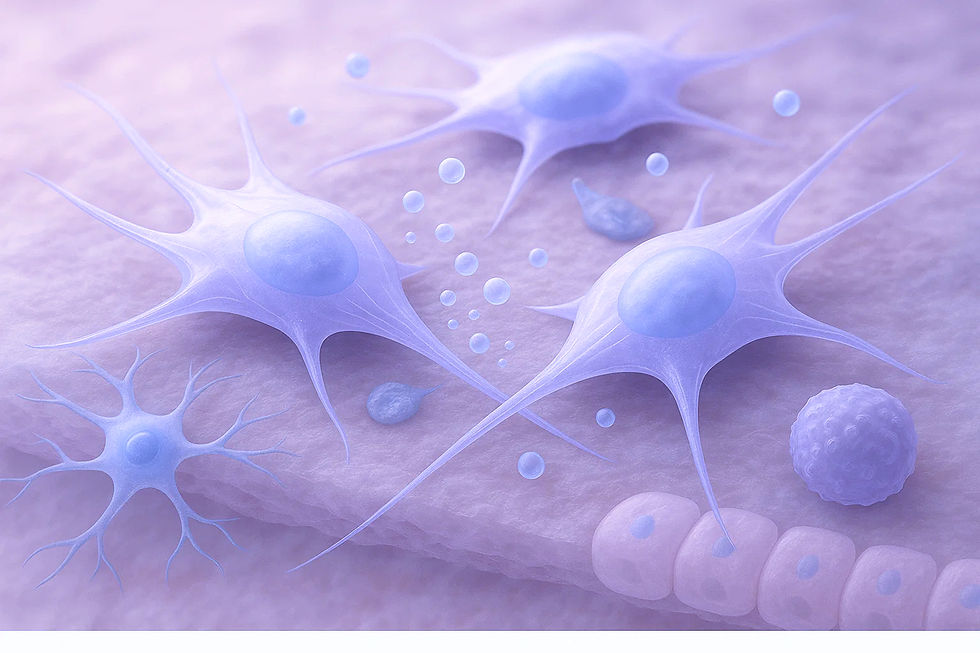
Cellular therapy is a medical approach that uses living cells to influence biological regulation within the body.
These cells do not replace organs or change developmental identity. Instead, they interact with immune and neurological pathways, helping modulate inflammatory activity, improve cellular signaling and restore systemic balance at a microscopic level.
In neurodevelopmental conditions, this biological modulation is used to address underlying physiological stressors that may interfere with normal regulation and adaptation. By supporting immune equilibrium and reducing chronic inflammatory load, cellular therapy can create more favourable internal conditions for neurological regulation, resilience and functional maturation, with clinical decisions guided by ongoing medical observation rather than one-time intervention.
Key Therapeutic Advantages
no surgery
Stem cell therapy is delivered through precisely controlled local or intravenous administration of a biomedical cell product.
The procedure is performed using specialised medical infusion systems and fine needles, without the need for surgical instruments or operative intervention.
No General Anesthesia Required
This helps minimize stress-related behavioral reactions and supports better tolerance of the procedure in children who are sensitive to environmental or sensory stimuli.
Minimal Recovery Time
The procedure requires no special preparation and does not disrupt the patient’s daily routine.
Its non-surgical nature and absence of general anesthesia allow for a short and well-tolerated recovery period.
No risk of rejection
When clinically appropriate, therapy may involve the use of the child’s own autologous cells, which are carefully evaluated and generally well tolerated.
This approach is selected to minimise immune response and ensure maximum biological compatibility.
In situations where autologous therapy is not suitable, carefully selected allogeneic cellular therapies may be considered only under strict medical protocols, with comprehensive safety screening and continuous physician oversight. The choice of approach is always based on the child’s individual clinical profile, age and medical indications, with safety as the primary priority.
Components of the
BioCells Program
Mesenchymal
Stem Cells (MSCs)
Mesenchymal stem cells (MSCs) are multipotent regenerative cells obtained from carefully selected and certified tissue sources and used in medicine to support immune and neurological regulation.
In children with Autism Spectrum Disorders, MSCs are applied for their ability to help modulate immune imbalance and excessive inflammatory activity that may interfere with neurological regulation and functional development. The goal is not to alter development, but to support a more stable biological environment for functional progress.
When autologous therapy is selected, MSCs are obtained from the child’s own bone marrow using a small-volume sample, collected under local anesthesia and strict pediatric medical supervision. The procedure is brief and designed to minimise discomfort. In cases where autologous collection is not appropriate, carefully screened donor-derived cellsmay be used instead, following strict medical and safety protocols. All cells are processed, purified and prepared in a controlled laboratory environment to reach therapeutic quality and safety standards.
Once prepared, MSCs are administered using non-surgical, minimally invasive methods, under continuous medical monitoring. By supporting immune balance and reducing biological stress, MSC-based therapy aims to support functional stability, adaptive regulation and long-term developmental potential, while prioritising the child’s safety, comfort and well-being at every stage.

Components of the
BioCells Program
T-regulatory cells
(T-regs)
T-regulatory cells (T-regs) are specialised immune cells responsible for maintaining immune balance and preventing excessive inflammatory responses in the body, including those that may affect neurological regulation.
In children with Autism Spectrum Disorders, T-regs are used to support immune regulation when signs of immune imbalance or chronic inflammatory activity are identified. Their role is to help reduce excessive immune activation that may place additional biological stress on the developing nervous system, potentially affecting regulation, adaptability and functional responses.
At BioCells Medical, T-reg therapy is delivered through an individualised medical protocol. When appropriate, T-regs may be obtained from the child’s own blood through a standardised, low-volume blood collection, performed under pediatric medical supervision. If autologous collection is not suitable, carefully screened donor-derived cells may be used, following strict clinical, ethical and safety standards. All cells are processed and prepared in a certified laboratory environment to ensure purity, safety and clinical consistency.
Once prepared, T-regs are administered using non-invasive or minimally invasive methods, without surgical procedures, and always under continuous physician monitoring. By supporting immune balance, T-reg therapy aims to promote greater biological stability, reduce immune-related stress and support functional regulation, while prioritising the child’s safety, comfort and long-term well-being.

Components of the
BioCells Program
Purified concentrated
exosomes
Purified exosomes are microscopic biological particles naturally released by regenerative cells. They contain concentrated regulatory molecules — including growth factors, proteins and micro-RNAs — that support communication between cells and help regulate biological processes.
In children with Autism Spectrum Disorders, exosomes are used to support immune–neurological regulation by addressing underlying biological stress factors, such as excessive inflammatory signaling and impaired cellular communication, which may interfere with functional regulation and adaptive development.
At BioCells Medical, exosomes are produced in our own certified laboratory as highly purified and precisely concentrated formulations, undergoing strict quality and safety control prior to any clinical use.
For pediatric patients, exosomes are administered intranasally, allowing the child to gently inhale the formulation through the nasal passages. This method is non-invasive, painless and does not require injections or anesthesia, making it particularly suitable for children. By acting at a molecular level, intranasal exosome therapy aims to support neurological regulation, promote biological balance and enhance adaptive capacity, while prioritising the child’s comfort, safety and overall well-being.

Components of the
BioCells Program
Personalised Neurostimulation Therapy
Neurostimulation is a non-invasive medical technology that uses low-intensity microcurrent stimulation to support neurological regulation and tissue responsiveness. The stimulation is gentle, precisely controlled and does not cause pain or discomfort.
In children with Autism Spectrum Disorders, neurostimulation is applied to support functional regulation by influencing key physiological processes, including microcirculation, cellular metabolism and inflammatory modulation. Through targeted microcurrent stimulation, this approach helps activate natural regulatory and adaptive mechanisms within the nervous system, without overstimulation or invasive procedures.
By gently modulating neuro-regulatory pathways, neurostimulation aims to support improved neurological regulation, sensory integration and adaptive functioning, contributing to greater stability in daily activities and overall quality of life — always under continuous medical supervision and with the child’s comfort as a priority.

Components of the
BioCells Program
Peptide-Based
Protocol
Peptide therapy utilises precisely engineered biological molecules that function as regulatory messengers, supporting communication between cells within the nervous and immune systems.
In children with Autism Spectrum Disorders, targeted peptides are used to support cellular metabolism, mitochondrial function and neurochemical balance, particularly in cases where signs of metabolic strain, chronic fatigue or regulatory imbalance are present. Their role is not to alter neurodevelopment, but to help create more stable biological conditions that support functional adaptation.
At BioCells Medical, peptide therapy is applied only as part of an individualised, physician-led program. Peptide formulations are carefully selected based on the child’s metabolic profile, age and clinical indicators, with safety and tolerance as the primary priorities.
By supporting cellular energy regulation and reducing biological stress, peptide therapy may contribute to improved endurance, sleep regulation, attention capacity and overall adaptive functioning, while always remaining within a medically supervised and child-appropriate framework.

Continuous Medical Supervision
Following the therapeutic phase, children enter a structured medical supervision and functional support period. This phase is designed to ensure safety, monitor individual response and support gradual functional adaptation over time.
Each child is supervised by a dedicated rehabilitation specialist, who closely follows functional status, behavioural regulation and overall well-being, providing personalised recommendations and ongoing medical guidance adapted to the child’s needs and tolerance.
Objective health and activity data, when clinically appropriate, may be supported by medical-grade monitoring tools, allowing physicians to better understand recovery dynamics, sleep patterns and daily functional indicators — always with the child’s comfort and safety as the priority.


Selected Clinical and Scientific References
-
Autologous Cord Blood Stem Cells for Autism
https://clinicaltrials.gov/study/NCT01638819 -
Autologous Umbilical Cord Blood Infusion for Children With Autism Spectrum Disorder (ASD)
https://clinicaltrials.gov/study/NCT02176317 -
Cord Blood Infusion for Children With Autism Spectrum Disorder (Duke ACT)
https://clinicaltrials.gov/study/NCT02847182 -
Safety and Efficacy of Stem Cell Therapy in Patients With Autism
https://clinicaltrials.gov/study/NCT01343511 -
Cell Therapy Approaches for Autism Spectrum Disorder: A Systematic Review
https://pubmed.ncbi.nlm.nih.gov/33582140/ -
Stem Cell Therapy in Autism Spectrum Disorders: Current Evidence and Future Directions
https://pubmed.ncbi.nlm.nih.gov/32745563/
Trusted by Patients Worldwide


Journey to Recovery
Starts Here
Personalised regenerative treatment designed around you.