

Muscular dystrophy:
Personalised Cellular treatment
A structured, physician-led program designed to stabilise muscle and neuromuscular function, aim to stop disease progression and chronic inflammatory activity within muscle tissue, and improve overall quality of life through continuous medical supervision and personalised therapeutic strategies.

Targeting disease
at Every Stage
Muscular Dystrophy is treated at all stages of the condition, with therapeutic protocols individually adapted to the specific type of dystrophy, disease severity, progression pattern and functional status.
Regenerative and cellular therapy targets the core biological mechanisms driving muscular dystrophy, including progressive muscle fibre degeneration, chronic inflammation within muscle tissue, impaired muscle regeneration, mitochondrial dysfunction and disruption of neuromuscular transmission.
Applied as a structured and adjustable medical program, therapy allows intervention at early, progressive and advanced stages of muscular dystrophy, with the objective of stabilising muscle and neuromuscular function, stopping functional decline, improving strength, endurance and mobility, and extending long-term functional stability, even as the disease evolves.
Clinical Results
from Our Practice
Based on structured observational analysis of 92 patients diagnosed with muscular dystrophy (including Duchenne, Becker, and limb-girdle subtypes) treated at BioCells Medical between 2013–2025.
(Data derived from internal clinical registry with longitudinal neuromuscular follow-up.)
Core Clinical Outcomes
• 75% of patients demonstrated measurable functional stabilisation within 3–6 months
• 70% showed improvement in proximal muscle strength or motor endurance
• 63% experienced improved ambulation capacity or assisted mobility performance
• Average 6-Minute Walk Test (6MWT) improvement: +38 meters within the first 6 months following protocol initiation
• 72% maintained sustained functional stability, with observational follow-up in selected cases extending up to 3.5 years, under continued monitoring and individualised maintenance strategy
Key Functional Improvements
• Increased lower-limb strength – 68%
• Improved stair climbing or assisted transfers – 61%
• Enhanced upper-limb function (lifting, reaching) – 64%
• Improved respiratory endurance and chest expansion – 59%
• Reduced fatigue during daily activity – 71%
• Improved postural stability and balance – 60%
Observed Clinical Timeline
• Initial functional response typically observed within 3–6 weeks
• Clinically meaningful improvement most commonly noted at 3–6 months
• Stabilisation phase commonly sustained for 2–3 years under structured follow-up and maintenance protocol
Outcomes vary depending on muscular dystrophy subtype, baseline muscle degeneration stage, age at treatment initiation, and individual biological response. These data represent observational clinical practice results and do not constitute a guarantee of therapeutic effect.


Understanding
Cellular Therapy
Cellular therapy is a medical approach that uses living cells to influence how the body responds to disease.
These cells do not replace organs or tissues. Instead, they interact with the immune and nervous systems, helping regulate inflammation, support damaged tissues and improve how the body functions at a cellular level.
Rather than acting as a one-time intervention, cellular therapy works by modifying the biological environment in which the disease progresses.
By modulating immune regulation and inflammatory activity, cellular therapy can support meaningful functional improvement, symptom stabilisation and the activation of the body’s own recovery mechanisms.
Key Therapeutic Advantages
no surgery
Stem cell therapy is delivered through precisely controlled local or intravenous administration of a biomedical cell product.
The procedure is performed using specialised medical infusion systems and fine needles, without the need for surgical instruments or operative intervention.
No General Anesthesia Required
Treatment does not require general anesthesia.
This is particularly important for elderly patients, individuals with neurological conditions, or those for whom anesthesia may pose additional medical risks.
Minimal Recovery Time
The procedure requires no special preparation and does not disrupt the patient’s daily routine.
Its non-surgical nature and absence of general anesthesia allow for a short and well-tolerated recovery period.
No risk of rejection
When clinically appropriate, therapy may involve the use of the patient’s own autologous cells, which are generally well tolerated and associated with a low risk of immune reactions.
In cases where autologous therapy is not feasible, carefully selected allogeneic cellular therapies may be applied within strict medical protocols, providing a safe and effective option for specific clinical indications.
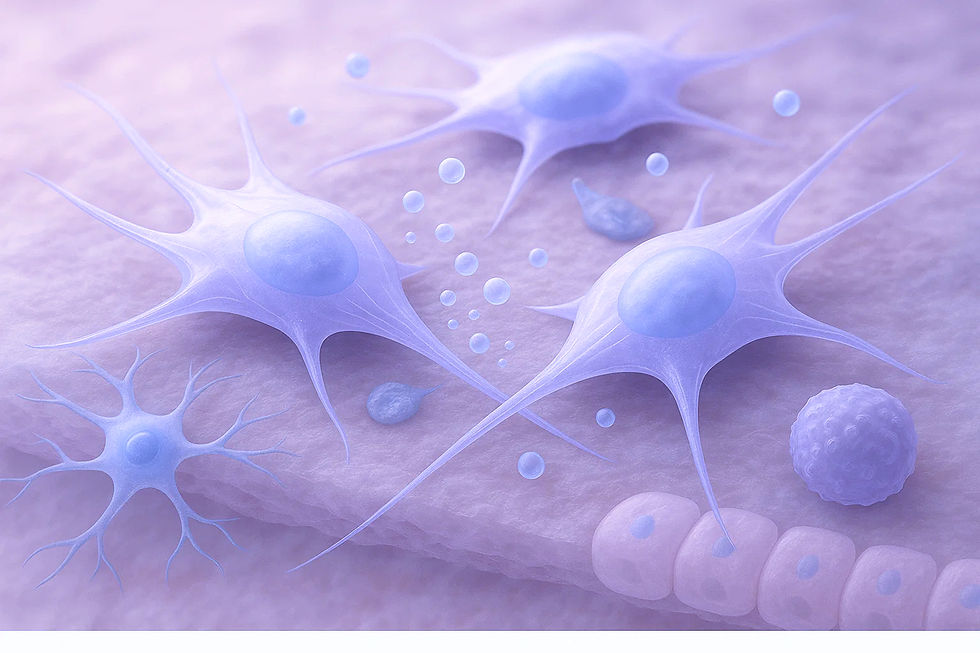
Components of the
BioCells Program
Mesenchymal
Stem Cells (MSCs)
Mesenchymal stem cells (MSCs) are multipotent regenerative cells obtained from carefully selected and certified tissue sources.
In Muscular Dystrophy, MSCs are applied for their ability to modulate chronic inflammation within muscle tissue, support muscle fibre regeneration, protect existing muscle structures and improve neuromuscular integrity.
Depending on clinical indications, MSCs are obtained either from the patient’s own bone marrow (approximately 50 ml, collected under local anesthesia) or from certified donor-derived sources. All cells are isolated, expanded and prepared in a controlled laboratory environment to reach therapeutic concentration.
By strengthening muscle resilience, regulating inflammatory activity and supporting regenerative processes within muscle tissue, MSC-based therapy aims to stop functional decline, stabilise muscle strength and endurance, improve mobility and support long-term functional stability and quality of life.

Components of the
BioCells Program
T-regulatory cells
(T-regs)
T-regulatory cells (T-regs) are specialised immune cells responsible for maintaining immune balance and preventing excessive or destructive inflammatory responses, particularly within muscle and neuromuscular tissues.
In Muscular Dystrophy, T-regs play a critical role in suppressing chronic inflammatory and immune-mediated processes that accelerate muscle fibre damage, fibrosis and progressive loss of muscle function.
At BioCells Medical, T-reg therapy is delivered through a personalised protocol based on either autologous cells (patient-derived) or carefully selected allogeneic cells (donor-derived), depending on clinical indications, immune profile and disease dynamics. The objective is to precisely recalibrate immune regulation and restore long-term immune-muscle stability.
Through targeted immune recalibration, T-reg therapy is designed to stop inflammation-driven functional deterioration, stabilise muscle and neuromuscular function and reduce symptom burden such as muscle weakness, fatigue, stiffness and exercise intolerance, supporting improved daily functioning and long-term functional stability in selected patients.

Components of the
BioCells Program
Purified concentrated
exosomes
Purified exosomes are nanoscale biological vesicles naturally released by regenerative cells, containing concentrated growth factors, regulatory proteins and micro-RNAs involved in cellular repair and intercellular communication.
In Muscular Dystrophy, exosomes function as molecular messengers that influence key disease-related processes by reducing oxidative stress, modulating inflammatory signaling and supporting metabolic activity within damaged muscle fibres and neuromuscular junctions.
At BioCells Medical, exosomes are produced in our laboratory as highly purified, concentrated formulations, ensuring consistent bioactivity, controlled composition and a high safety profile prior to clinical application.
Acting at a molecular level, purified exosomes are designed to interrupt degenerative and fibrotic signaling pathways, enhance muscle cell resilience and metabolic efficiency, and support muscle repair, endurance and neuromuscular responsiveness — contributing to measurable functional improvement and sustained stability across different stages of Muscular Dystrophy.

Components of the
BioCells Program
Personalised Neurostimulation Therapy
Neurostimulation is a non-invasive medical technology that delivers precisely controlled electrical impulses to targeted regions of the brain and spinal cord.
In Muscular Dystrophy, neurostimulation is used to enhance neuromuscular activation, improve signal transmission between the nervous system and weakened muscle groups, and support more effective muscle recruitment during voluntary movement.
At BioCells Medical, neurostimulation is integrated into a personalised therapeutic protocol and applied according to the patient’s functional profile, muscle involvement and disease stage, with the goal of optimising neuromuscular responsiveness and reinforcing functional recovery.
By modulating neuromuscular circuits and restoring more physiological activation patterns, neurostimulation aims to stop progressive loss of muscle control, improve coordination, posture and movement efficiency, reduce compensatory strain, and restore greater functional stability and daily mobility.

Components of the
BioCells Program
Peptide-Based
Protocol
Peptide therapy utilises precisely engineered biological molecules that function as cell-to-cell messengers, restoring disrupted communication within the muscular, nervous and immune systems.
In Muscular Dystrophy, targeted peptides are applied to optimise mitochondrial function, support cellular energy production and protein synthesis, and regulate metabolic and inflammatory pathways that contribute to muscle fibre degeneration, weakness and progressive loss of muscle function.
At BioCells Medical, peptide therapy is incorporated into a personalised therapeutic plan through custom-tailored formulations, selected according to the patient’s metabolic profile, muscle involvement and disease stage, with the objective of reinforcing long-term muscle protection, metabolic efficiency and functional stability.
By optimising cellular signaling and energy regulation, peptide therapy aims to stop metabolic-driven functional decline, reduce muscle fatigue, improve muscle endurance and responsiveness, and maintain sustained energy balance — strengthening overall muscle performance and daily functional capacity.

Comprehensive Medical Rehabilitation
Following treatment, patients enter a structured medical rehabilitation and follow-up phase.
Each patient is supervised by a dedicated rehabilitation specialist who monitors recovery, functional status and overall well-being, providing individual recommendations and ongoing medical guidance.
Objective health data collected through a medical-grade wristband supports clinical decision-making, allowing continuous assessment of recovery dynamics and quality-of-life indicators.


SAFE FOR
EVERY stage OF LIFE
The treatment program is delivered as a non-surgical, physician-led approach under continuous medical supervision.
All therapies are individually adjusted according to the patient’s clinical condition, disease stage and age, with safety continuously prioritised throughout the treatment process.


Selected Clinical and Scientific References
-
Monitoring of Outcomes of Cellular and Exosome-based Therapies in Autoinflammatory and Post-infectious Neuroinflammatory Syndromes
https://clinicaltrials.gov/study/NCT07145502 -
Stem Cell Therapy for Muscular Dystrophy: Current Status and Future Perspectives
https://pubmed.ncbi.nlm.nih.gov/31416914/ -
Mesenchymal Stem Cells in Duchenne Muscular Dystrophy: Mechanisms and Therapeutic Potential
https://pubmed.ncbi.nlm.nih.gov/31279939/ -
Cell-Based Therapies for Muscular Dystrophy: A Systematic Review
https://pubmed.ncbi.nlm.nih.gov/32763173/ -
Exosomes in Skeletal Muscle Regeneration and Repair
https://pubmed.ncbi.nlm.nih.gov/33970692/ -
Immunomodulation and Inflammation Control in Muscular Dystrophy
https://pubmed.ncbi.nlm.nih.gov/30898724/
Trusted by Patients Worldwide


Journey to Recovery
Starts Here
Personalised regenerative treatment designed around you.