Hereditary Ataxia — improved coordination and speech recovery
- Dr. Uladzislau Tsvirko
- Mar 12, 2024
- 2 min read
Clinical Case Observation: Spinocerebellar Ataxia Type 1 (SCA1)
Patient: Anvar, 31 years | Tashkent, Uzbekistan
Patient Background
Anvar, a 31-year-old man from Tashkent, Uzbekistan, was diagnosed with hereditary spinocerebellar ataxia type 1 (SCA1) — a progressive neurodegenerative condition with a documented family history, including affected first-degree relatives.
At the time of consultation, the condition was associated with gait instability, impaired balance, reduced fine motor control, and progressively worsening speech articulation, resulting in increasing limitations in daily functioning and communication.
Clinical Approach at BioCells Medical
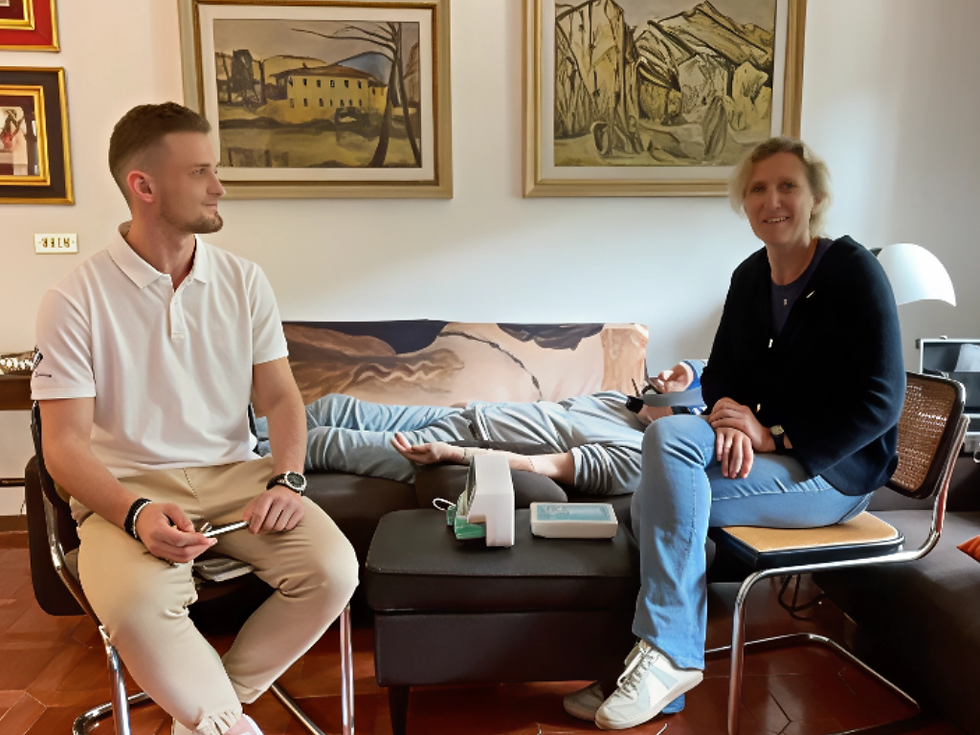
Approximately two months prior, Anvar began a fully personalised regenerative medicine programme developed by the BioCells Medical team. Given the complexity of the case and mobility-related challenges, the medical team travelled to Uzbekistan to deliver the treatment on site, ensuring continuity of care and patient comfort.
The treatment programme included:
Bone marrow extraction followed by laboratory cultivation of autologous neuroinduced stem cells,
Systemic intravenous infusion of stem cells and purified exosomes,
Intrathecal administration for targeted delivery to the central nervous system,
A personalised neuro-motor rehabilitation plan, adapted to disease stage and functional needs.
The full protocol was delivered over two consecutive treatment days, followed by supportive exercises and structured clinical monitoring.
Post-Treatment Observations
Within the first month following treatment, clinical and functional changes were observed and reported by the patient and family, including:
improved balance and coordination, leading to greater stability during daily movements,
normalisation of muscle tone in both upper and lower limbs,
increased physical endurance, including easier stair climbing,
notably clearer speech, improved vocal control, and more confident articulation.
Alongside these changes, improvements in self-confidence and autonomy were noted, with smoother communication and social interaction reported by family members.
Follow-Up and Ongoing Monitoring
Anvar continues his individual rehabilitation programme, with ongoing guidance provided remotely by the BioCells Medical specialists. Current follow-up indicates stable functional status, and consideration of further treatment stages remains dependent on clinical evolution and functional priorities.
Clinical Context
This case illustrates how a personalised regenerative medicine strategy, combined with targeted neuro-motor rehabilitation and international medical deployment, may support functional capacity in patients with rare hereditary neurodegenerative conditions such as SCA1. At BioCells Medical, each programme is individually designed and delivered with continuous medical oversight, regardless of patient location.
Medical Consultation
Patients and families affected by rare or hereditary neurological conditions who are seeking professional medical guidance may request a free medical consultation with the BioCells Medical team.
Each case is assessed individually to determine the most appropriate, personalised regenerative care approach.